Friday, August 31, 2018

Famous Indian spiritual and religious figures
Famous Indian spiritual and religious figures

100buddha-daibatsuLord Buddha (c 560BC – c 460BC) – Founder of Buddhism. Gave up the comforts of being a Prince in a palace to seek enlightenment in the forests. After gaining the experience of Nirvana, Lord Buddha spent many years travelling India teaching his philosophy of enlightenment and peace.
krishnaSri Krishna – The hero of India’s classic – the Bhagavad Gita. It was Sri Krishna who taught to Arjuna the sublime philosophy of yoga contained in the Gita. It was Sri Krishna who brought religion and spirituality to everyone. Sri Krishna also developed a new path of yoga – bhakti yoga, the yoga of devotion.
Arjuna was one of the greatest warriors of his age and a key figure in the Mahabharata. Arjuna was directed by Sri Krishna on the battlefield of Kurukshetra.
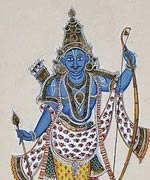
Sri Ramachandra considered the seventh Avatar of Vishnu. Rama’s life is held as an example of the perfect devotion to dharma. His life and teachings are incorporated in the Ramayana, which tells of his exploits and adventures against the demon Ravana.
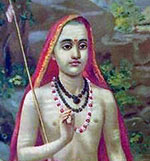
SankaracharyaAdi Shankara (9th Century AD) Shankaracharya was a noted spiritual teacher and philosopher. He spread a philosophy of Advaita Vedanta, which stresses the underlying unity of creation. He also founded the Dashanami monastic order
Guru Nanakguru nanak (1469-1539) Spiritual Guru and founder of Sikhism. Nanak was born in a Hindu family but taught God was beyond religious distinction and sought to teach that God was in all.
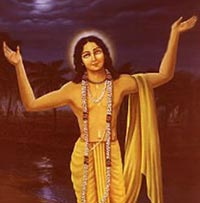
Sri Chaitanya (1486–1534) a devotee of Lord Krishna. Chaitanya revitalised the ‘bhakti’ movement of devotional yoga
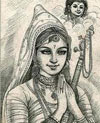
mirabaiMirabai (c. 1498 – c. 1557) A Hindu princess who forsook Royal privileges to become a saint and devote her life to Lord Krishna. She composed many devotional bhajans.
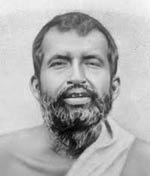
Sri Ramakrishna (1836 – 1886) was an influential Bengali mystic and spiritual Guru. Ramakrishna practised an intense spiritual sadhana – through his experience, he believed that all religions led to the same goal of God-realisation.
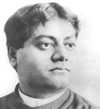
vivekanandaSwami Vivekananda (1863 – 1902 ) – The indomitable spirit of Swami Vivekananda awoke in his fellow Indians a renewed sense of pride and self-belief. Vivekananda embodied both the spirituality of ancient India and the dynamism of the West. He became renowned in the West after his inspirational message of religious tolerance was heard at the World Parliament of Religions 1893.
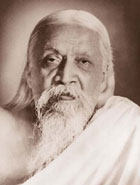
sri_aurobindoSri Aurobindo (1872 – 1950) One of the key figures in the early Indian Independence movement, Aurobindo initiated early efforts at full independence. After his trial, he retreated to Pondicherry to concentrate on spiritual quest and writing epics such as Savitri and Life Divine.
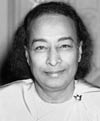
Paramahansa Yogananda (1893 – 1952) was a popular spiritual Teacher, who came to the West in the 1920s. Yogananda was a disciple of Sri Yukteswar and was responsible for the early spread of Hindu yoga in the US.
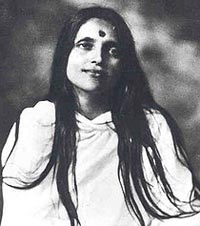
Anandamayi Ma (1896 – 1982) a Hindu saint from Bengal. Many followers and observers found her to be often in a divinely intoxicated state. Healing and other miracles have been attributed to her.
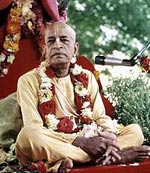
A. C. Bhaktivedanta Swami Prabhupada (1896-1977) is the founder of the International Society for Krishna Consciousness (ISKCON)
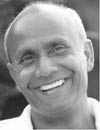
Sri Chinmoy (1931-2007) born in India, Sri Chinmoy spent 20 years in the Sri Aurobindo Ashram before coming to the US in 1964. He established meditation centres around the world and created the Sri Chinmoy Oneness-Home Peace Run.

Thursday, August 30, 2018

Dr. A.P.J. Abdul Kalam :-) The pearl of Indian soil known for his legacy in Indian missile technology

Dr. Avul Pakir Jainulabdeen Abdul Kalam 

              :-) The pearl of Indian soil 

                    known for his legacy in  Indian missile technology


A.P.J. Abdul Kalam, in full Avul Pakir Jainulabdeen Abdul Kalam, (born October 15, 1931, Rameswaram, India—died July 27, 2015, Shillong), Indian scientist and politician who played a leading role in the development of India’s missile and nuclear weapons programs. He was president of India from 2002 to 2007.


Kalam earned a degree in aeronautical engineering from the Madras Institute of Technology and in 1958 joined the Defence Research and Development Organisation (DRDO). He soon moved to the Indian Space Research Organisation, where he was project director of the SLV-III, India’s first indigenously designed and produced satellite launch vehicle. Rejoining DRDO in 1982, Kalam planned the program that produced a number of successful missiles, which helped earned him the nickname “Missile Man.”

From 1992 to 1997 Kalam was scientific adviser to the defense minister, and he later served as principal scientific adviser (1999–2001) to the government with the rank of cabinet minister. His prominent role in the country’s 1998 nuclear weapons tests established Kalam as a national hero, although the tests caused great concern in the international community. In 1998 Kalam put forward a countrywide plan called Technology Vision 2020, which he described as a road map for transforming India from a less-developed to a developed society in 20 years. The plan called for, among other measures, increasing agricultural productivity, emphasizing technology as a vehicle for economic growth, and widening access to health care and education.

In 2002 India’s ruling National Democratic Alliance (NDA) put forward Kalam to succeed outgoing President Kocheril Raman Narayanan. Kalam was nominated by the Hindu nationalist (Hindutva) NDA even though he was Muslim, and his stature and popular appeal were such that even the main opposition party, the Indian National Congress, also proposed his candidacy. Kalam easily won the election and was sworn in as India’s 11th president, a largely ceremonial post, in July 2002. He remained committed to using science and technology to transform India into a developed country. In 2007 Kalam left office and was succeeded by Pratibha Patil, the country’s first woman president.
Kalam wrote several books, including an autobiography, Wings of Fire (1999). Among his numerous awards were two of the country’s highest honours, the Padma Vibhushan (1990) and the Bharat Ratna (1997).

Other awards and honours

Year of award or honourName of award or honourAwarding organisation
2014Doctor of ScienceEdinburgh University, UK
2013Von Braun AwardNational Space Society
2012Doctor of Laws (Honoris Causa)Simon Fraser University
2011IEEE Honorary MembershipIEEE
2010Doctor of EngineeringUniversity of Waterloo
2009Honorary DoctorateOakland University
2009Hoover MedalASME Foundation, USA
2009International von Kármán Wings AwardCalifornia Institute of Technology, USA[174]
2008Doctor of Engineering (Honoris Causa)Nanyang Technological University, Singapore[175]
2008Doctor of Science (Honoris Causa)Aligarh Muslim University, Aligarh
2007Honorary Doctorate of Science and TechnologyCarnegie Mellon University
2007King Charles II MedalRoyal Society, UK
2007Honorary Doctorate of ScienceUniversity of Wolverhampton, UK
2000Ramanujan AwardAlwars Research Centre, Chennai
1998Veer Savarkar AwardGovernment of India
1997Indira Gandhi Award for National IntegrationIndian National Congress
1997Bharat RatnaGovernment of India
1995Honorary FellowNational Academy of Medical Sciences
1994Distinguished FellowInstitute of Directors (India)
1990Padma VibhushanGovernment of India
1981Padma BhushanGovernment of India

Thursday, August 16, 2018

Atal Bihari Vajpayee

                           Birthday: December 25, 1924
                               Nationality: Indian
                 Famous: Quotes By Atal Bihari Vajpayee Prime Ministers
Sun Sign: Capricorn
Died At Age: 93
Born In: Gwalior
Famous As: Former Prime Minister Of India
Height: 1.68 M
Political Ideology: Bharatiya Janata Party (1980–Present)
Father: Krishna Bihari Vajpayee
Mother: Krishna Devi
Siblings: Prem
Religion: Hinduism
Died On: August 16, 2018
Place Of Death: New Delhi
Founder/Co-Founder: Jana Sangh
Net Worth: $2 Million As Of Jan 15, 2017

Atal Bihari Vajpayee

 Atal Bihari Vajpayee was a highly respected
veteran politician who had served as the Prime Minister of India in three non-consecutive terms. He was a member of the Indian Parliament for almost five decades; in fact he was the only parliamentarian who had been elected from four different states at different times, namely, Uttar Pradesh, Madhya Pradesh, Gujarat and Delhi. He made his foray into politics during the pre-independence era when he took part in the Quit India Movement which led to his arrest and imprisonment. A true patriot, he was one of the founding members of the erstwhile Bharatiya Jana Sangh, an Indian nationalist party. A multi-faceted personality, he was a very skilled poet with several published poems. Also well known is his love for his native language Hindi—he was the first person to deliver a speech in Hindi at the U.N. General assembly. He was very famous for his oratory skills and held several prestigious positions in Indian politics before being elected the Prime minister. His first stint as the Prime Minister of India lasted for just 13 days. He was again sworn in for the second time after a couple of years. This time too, his government lasted for just over a year. His third stint as the Prime Minister was his most successful one and he served a full term of five years in this position.
Recommended Lists Outside:

Childhood & Early Life
  • Atal Bihari Vajpayee was born into a middle-class family in Gwalior. His father was Krishna Bihari
  •  Vajpayee, a school teacher and poet, and his mother was Krishna Devi.
  • He attended the Saraswati Shishu Mandir and later went to Victoria College from where he 
  • graduated with distinction in Hindi, English and Sanskrit.
  • He enrolled at DAV College, Kanpur to complete his post graduation and earned his M.A. in
  •  Political science.
  • He was a patriot at heart and participated in India’s struggle for freedom even as a 
  • student and edited several nationalist Hindi newspapers.

Political Career
  • He became associated with the Bharatiya Jana Sangh (BJS), a right-wing political party founded
  •  by Syama Prasad Mookerjee in 1951. He became a loyal follower of Mookerjee and supported 
  • him during his fast-unto-death in Kashmir in 1954.
  • Vajpayee was elected to the Lok Sabha for the first time from Balrampur (U.P.) in 1957. 
  • He proved himself to be an excellent orator and gave powerful speeches.
  • He was made the national president of the Jana Sangh in 1968 after the death of 
  • Deendayal Upadhyaya. Over the next few years he worked tirelessly with Nanaji 
  • Deshmukh, Balraj Madhok and Lal Krishna Advani to make the Jana Sangh a prominent presence
  •  in Indian politics.
  • In 1977, the BJS was united with the Bharatiya Lok Dal and the Socialist 
  • Party to form the Janata Party. After the victory of the Janata Party in the general elections, 
  • Vajpayee became the Minister of External Affairs in Prime Minister Morarji Desai’s government.
  • The Janata Party was dissolved following Morarji Desai’s resignation as Prime Minister in 1979. 
  • Vajpayee, in collaboration with Lal Krishna Advani and Bhairon Singh Shekhawat formed the
  •  Bharatiya Janata Party (BJP) in 1980 and became the party’s first president.
  • After the 1984 elections, when BJP was reduced to two seats, Vajpayee worked tirelessly to 
  • build the party and in the next parliamentary elections in 1989 BJP won 88 seats.
  • By 1991, BJP had emerged as the principal opposition party and the party won 120 seats in
  •  1991 parliamentary elections.
  • He became the Leader of the Opposition in Parliament in 1993 and in November 1995 at a 
  • BJP conference in Mumbai, he was declared as the Prime Ministerial candidate of BJP.

Thursday, August 9, 2018

लाल बहादुर शास्त्री की मौत :-? कुछ अनुमान


               लाल बहादुर शास्त्री की मौत :-? 

                                       कुछ  अनुमान 


यहां लाल बहादुर शास्त्री की मौत के आसपास 8 षड्यंत्र हैं
अस्वीकरण: मैं इनमें से किसी भी सिद्धांत का समर्थन या समर्थन नहीं करते हैं। यह आलेख केवल यह सूचित करने के लिए है कि घटना के पीछे ये कारण हो सकते हैं।

1 9 65 में भारत-पाक युद्ध के बाद, लाल बहादुर शास्त्री ने एक समझौते पर हस्ताक्षर करने के लिए ताशकंद की यात्रा की जो औपचारिक रूप से 10 जनवरी, 1 9 66 को युद्ध समाप्त कर देगा। एक दिन बाद, वह मृत पाया गया। यह आरोप लगाया गया था कि वह दिल के दौरे से मर गया था लेकिन हालात बेहद संदिग्ध लग रहे थे। हाल ही में शास्त्री के परिवार ने सुभाष चंद्र बोस की तरह घोषित होने से संबंधित फाइलों को घोषित कर दिया है। तब तक, हम केवल षड्यंत्र के तालाब में कूद सकते हैं और मछली क्या सच हो सकती है।

लाल बहादुर शास्त्री की मौत के आस-पास 8 रहस्य और षड्यंत्र यहां दिए गए हैं:

1. उसकी मृत्यु में पहली पूछताछ के रिकॉर्ड कहां हैं?
राज नारायण जांच स्पष्ट रूप से किसी भी निष्कर्ष के साथ नहीं आ सकती है, हालांकि इस जांच के संसद की पुस्तकालय में कोई रिकॉर्ड नहीं है। निष्कर्ष के बावजूद, यह प्रश्न उठाता है कि रिपोर्ट क्यों गुम है, दबाया गया है या नष्ट हो गया है।


2. कोई पोस्ट-मॉर्टम आयोजित नहीं किया गया था। या वहां था?
उनकी पत्नी ललिता ने कहा कि शरीर नीला था और वहां कटौती के निशान थे। अगर यह शर्मीली हो तो शरीर नीला हो जाता है। अगर पोस्ट-मॉर्टम आयोजित नहीं किया गया था, तो ये संकेत क्यों होंगे? और अगर यह था, रिपोर्ट कहां हैं?


3. क्या यह जहरीला हो सकता है?

उनके निजी चिकित्सक, आरएन चुग ने कहा था कि वह पूर्ण स्वास्थ्य में थे और अतीत में कभी भी कोई दिल नहीं था। एक दिल का दौरा बेहद असंभव लग रहा था। और चूंकि दावा किया गया था कि पोस्ट-मॉर्टम आयोजित नहीं किया गया था, तो पंचर अंक जहरीले होने का परिणाम हो सकता है


4. गवाहों के बारे में क्या?
रात शास्त्री की मृत्यु के दो गवाह थे और वे 1 9 77 में संसदीय निकाय के सामने होने के लिए निर्धारित थे। एक डॉ आरएन चुग थे, जो समिति के सामने गवाही देने के रास्ते पर थे लेकिन एक ट्रक ने मारा और उनकी मृत्यु हो गई।

दूसरा उसका नौकर राम नाथ था जिसने शास्त्री के घर का दौरा किया और परिवार के सदस्यों के अनुसार उन्होंने कहा, "बहत दीन का बोज था, अम्मा। आज सबा बटा इनकार करते हैं (मैं इस बोझ को बहुत लंबा कर रहा हूं। मैं इसे आज छोड़ दूंगा)। "वह भी एक कार से मारा गया था। उसके पैरों को कुचल दिया गया था और उन्हें कम किया जाना था। उसने अपनी याददाश्त खो दी।


5. सीआईए एजेंट के शब्द का क्या?
एक पत्रकार ग्रेगरी डगलस ने सीआईए एजेंट रॉबर्ट क्रॉली का साक्षात्कार किया, जिन्होंने पुष्टि की कि लाल बहादुर शास्त्री और यहां तक ​​कि डॉ। होमी भाभा (भारत में परमाणु विज्ञान के पिता) की मृत्यु सीआईए का काम था। शास्त्री ने परमाणु परीक्षणों के लिए हरे रंग की रोशनी दी और अमेरिका को इस क्षेत्र में सुधारित राज्य और भारत-रूसी प्रभुत्व के रूप में उभरने की धमकी दी गई। साक्षात्कार "वार्तालाप के साथ बातचीत" नामक पुस्तक में प्रकाशित किया गया था।


6. क्या रूसी बटलर शामिल था?
बटलर तत्कालीन प्रधान मंत्री की सेवा कर रहा था और वास्तव में गिरफ्तार किया गया था। उन्हें शास्त्री तक आसानी से पहुंच थी और यदि वास्तव में वह जहर हो गया था, तो बटलर निश्चित रूप से एक बड़ा संदिग्ध होगा। लेकिन उन्हें चलने की इजाजत थी और अधिकारियों ने कहा कि शास्त्री को हृदय की गिरफ्तारी से मृत्यु हो गई थी।


7. दिल्ली पुलिस ने दस्तावेज़ों की पुनर्प्राप्ति को संभालने के लिए क्यों कहा था?
गृह मंत्रालय ने घटना के आधार पर किसी भी दस्तावेज या जानकारी को पुनः प्राप्त करने के लिए इस मामले को दिल्ली पुलिस और राष्ट्रीय अभिलेखागार को संदर्भित किया। शास्त्री के बेटे ने कहा कि यह "बेतुका और मूर्ख" था कि कैसे बैठे प्रधान मंत्री की मृत्यु उच्च अधिकारियों की बजाय जिला स्तर पुलिस द्वारा की गई थी।


8. आरटीआई के बारे में क्या?
अनुज धर (दक्षिण एशिया पर सीआईए की आंख के लेखक) ने पीएम की मौत से संबंधित एक आरटीआई दायर की। लेकिन पीएमओ ने जवाब दिया कि केवल एक वर्गीकृत दस्तावेज था जिसे घोषित नहीं किया जा सका क्योंकि इससे विदेशी संबंधों में बाधा आ सकती है।

कुलदीप नायर को एक अलग प्रतिक्रिया दी गई, "भारत के पूर्व प्रधान मंत्री लाल बहादुर शास्त्री की मृत्यु से संबंधित कोई भी रिकॉर्ड इस जिले में उपलब्ध नहीं है ... इसलिए नई दिल्ली जिले से संबंधित आवश्यक जानकारी का इलाज किया जा सकता है शून्य के रूप में। "
उन्होंने 1 9 65 के युद्ध में राष्ट्र को जीत हासिल की। उनका नारा, 'जय जवान जय किसान', हमारी युद्ध रोना बन गया। उनकी मृत्यु के पीछे रहस्य में कई मोड़ 11 जनवरी, 1 9 66 की रात से ताशकंद में हुए थे।
अगर सरकार उनकी मृत्यु पर दस्तावेजों को घोषित करना था, तो उनके परिवार और भारतीय जनता को हमारे दूसरे प्रीमियर की मृत्यु के बारे में कुछ महत्वपूर्ण सबूत या जानकारी मिल सकती है।

Lal Bahadur Shastri :-? Few Theories

              Lal Bahadur Shastri :-? 

                                    Few Theories


Here Are 8 Conspiracies Surrounding The Death Of Lal Bahadur Shastri
DISCLAIMER: I don't endorse or support any of these theories. This article is only meant to inform that these may have been the reasons behind the event.

After the Indo-Pak war in 1965, Lal Bahadur Shastri travelled to Tashkent to sign an agreement that would formally end the war on 10th January, 1966. One day later, he was found dead. It was alleged that he died of a heart attack but the circumstances seemed extremely suspicious. Recently Shastri's family has also asked files related to his demise be declassified, just like Subhash Chandra Bose's. Until then, we can only jump into the pond of conspiracies and fish out what could be the truth.

Here are 8 mysteries and conspiracies surrounding the death of Lal Bahadur Shastri:

1. Where are the records of the first inquiry into his death?
The Raj Narain Inquiry apparently could not come up with any conclusions, however there are no records in the Parliament's library of this inquiry. Regardless of the conclusion, it does raise questions as to why the report is missing, suppressed or destroyed.


2. There was no post-mortem conducted. Or was there?
His wife Lalitha said the body was blue and there were cut marks. A body turns blue if it is embalmed. If there was no post-mortem conducted, then why would these indications be there? And if it was, where are the reports?


3. Could it be poisoning?

His personal doctor, RN Chugh, had said that he was in perfect health and never had any heart issues in the past. A heart attack seemed highly unlikely. And since there were claims that there was no post-mortem conducted, then the puncture marks could be a result of poisoning


4. What about the witnesses?
There were two witnesses the night Shastri died and they were scheduled to be in front of the parliamentary body in 1977. One was Dr RN Chugh, who was on his way to testify in front of the committee but was hit by a truck and died.

The other was his servant Ram Nath who visited Shastri's home first and according to the family members he said, “Bahut din ka bojh tha, amma. Aaj sab bata denge (I have been carrying this burden too long. I will shed it today).” He too was hit by a car. His legs were crushed and had to be amputated. He lost his memory.


5. What of the CIA agent's word?
Gregory Douglas, a journalist, interviewed CIA agent Robert Crowley, who confirmed that the death of Lal Bahadur Shastri and even Dr Homi Bhabha (father of Nuclear Science in India) was the work of the CIA. Shastri gave the green light for nuclear tests and the US seemed threatened by India emerging as a reformed state and also of Indo-Russian dominance in the region. The interview was published in a book called, "Conversations with the Crow" .


6. Was the Russian butler involved?
The butler was serving the then PM and was in fact arrested. He had easy access to Shastri and if in fact he was poisoned, the butler would certainly be a big suspect. But he was allowed to walk and the authorities maintained that Shastri died of cardiac arrest.


7. Why was Delhi Police asked to handle the retrieval of docs?
The Home Ministry referred the matter to Delhi Police and the National Archives for retrieving any documents or information based on the incident. Shastri's son said that it was "absurd and silly" how the death of a sitting PM was inspected by district level police instead of higher authorities.


8. What about the RTIs?
Anuj Dhar (author of CIA's Eye on South Asia) filed an RTI pertaining to the PM's death. But the PMO responded saying there was only one classified document which could not be declassified as it may disrupt foreign relations.

A different response was given to one, Kuldip Nayar, "No such record related to the death of the former Prime Minister of India Lal Bahadur Shastri is available in this district... Hence the requisite information pertaining to New Delhi district may please be treated as nil."
He led the nation to victory in the 1965 war. His slogan, ' Jai Jawan Jai Kisan', became our war cry. Many twists in the mystery behind his death have taken place since the night of 11th Jan, 1966 in Tashkent.
If the government was to declassify documents on his death, his family and the Indian public may get some substantial evidence or information on how our second premier died.

Please share and subscribe my blog for more such news

SSC Recruitment 2018: Centre to fill over 1,100 vacant posts in different departments

SSC Recruitment 2018: Centre to fill over 1,100 vacant posts in different departments The Staff Selection Commission (SSC) is all...